
"There are three kinds of lies: lies, damned lies, and statistics."
Mark Twain attributed that cracker of a quote to Benjamin Disraeli, but there's no evidence that Disraeli actually said it. Statistics, like excellent quotes, also suffer from an evidence problem, but tweaked numbers and selective data are often used to establish weak arguments. The way we casually sling numbers about had made it very easy to spin and twist data, but also very hard to figure out the veracity of numbers chucked at us.
This week on #FridaysatPROTO, join us for a conversation on the tools and methods that journalists can use to navigate misleading statistics and avoid the propagation of incorrect information.

John is an economist by training, a financial journalist by the years, and a data fiend and a new-economy explorer at heart. He is co-founder of How India Lives, a search engine for public data. Before that, he worked as a journalist for 11 years, writing on business and the economy for the ET, Outlook Business, Business Standard and Mint.



Swagata Yadavar is an award-winning health journalist based in New Delhi. She is passionate about uncovering the gaps in access to healthcare and writing about public health policies. She was previously with The Week, a national magazine.

Guneet is an information technology consultant working primarily with development sector organizations. His work revolves either around data journeys and web development needs. He has an active interest in the open data and open source movements, and is an organizer with Datameet's Delhi chapter.
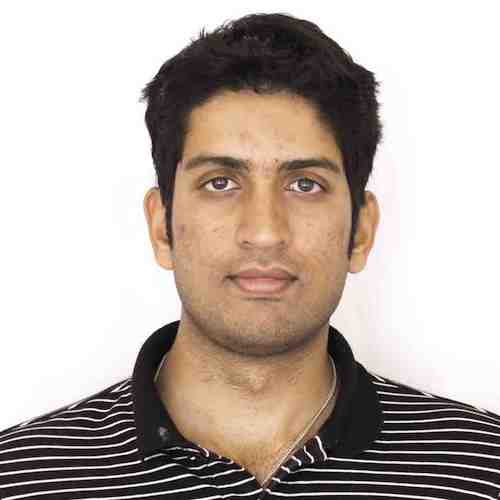
Vishnu is Assistant Editor (Data) at Mint where he helps run Plain Facts, India's only daily data journalism column. Before Mint, he worked in development policy with various organisations. He has an undergraduate degree in Economics and a Masters in International Political Economy.
Disclaimer: Names, profiles and photographs of all guest speakers are displayed for informational purposes only. Participation in our events or being featured on our website or any other other published material does not imply endorsement, affiliation or representation between the speaker and PROTO.

